Daily Toilet Cleaner with Castile Soap
A quick daily spray that keeps the bowl clean and fresh between deep cleans.
Takes 2 minutes · Makes 250 ml
What you’ll need
- 50 ml Castile Soap
- 5–10 drops Essential Oil (optional)
- 200 ml Hot water
- Trigger Spray Bottle (optional)
Method 1: Spray
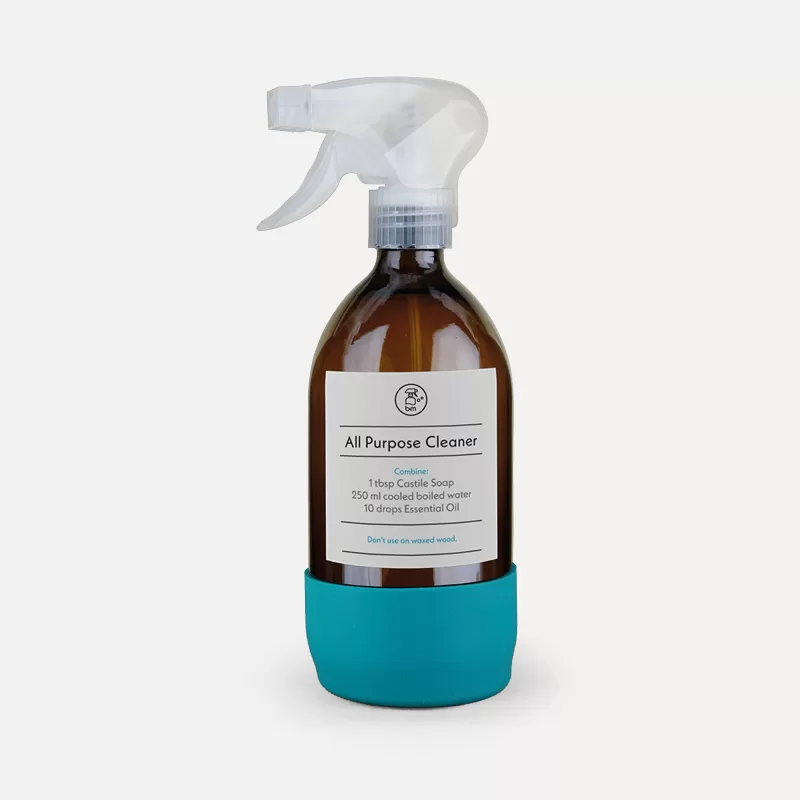
- Combine 50 ml of Castile Soap with 200 ml of previously boiled and slightly cooled water in a container until fully dissolved.
- Pour the mixture into a spray bottle using a funnel, then optionally add 5 to 10 drops of your favourite Essential Oil (remember, if you’re using it, always add it last). Be sure to label your cleaning solution with a waterproof label if you plan to store it for an extended period.
- Shake well and spray the bowl with the solution allow it to work for five to ten minutes.
- Give the toilet bowl a good scrub and flush it clean.
- For stubborn marks, put a few drops of neat Castile Soap straight onto the toilet brush.
Method 2: Directly
- Apply the concentrated soap directly into the toilet bowl.
- Allow it to work for five to ten minutes.
- Give it a good scrub with a brush, then rinse away the grime, or for an extra cleaning and disinfecting boost, pour over a kettle of hot water (slightly cooled).
- Add a couple of drops of your favourite Essential Oil directly to the bowl for a fresh finishing touch.
Effectively clean your toilet bowl.
Soap lifts everyday grime so the brush can do its job. It isn’t a limescale remover; for that, use Citric Acid on a separate day.
Essential Oils: Add them last and give the bottle a shake. Essential Oils are very potent, so 10–20 drops per 500 ml is plenty. Fancy a stronger scent? Enjoy your oils separately in an oil burner.
The science: How oils become soap (ScienceDirect) →

Waxed floors:
Do not use Castile Soap on waxed or oiled wood floors, because it could break down the wax.

Mixing with acids:
Since Castile Soap is alkaline, you shouldn’t mix it directly with acidic substances like lemon juice, Citric Acid or vinegar. Acid will react with the soap itself and break apart the soap molecules and neutralise its effects.

Hard Water:
Whilst Castile Soap is a very reliable and mild cleaner, it can leave a residue on shiny or hard surfaces, especially when it’s used with hard water (the soap reacts with minerals from the water to form a salt). Use Castile Soap with distilled water if you live in a hard water area or cut through the leftover residue by applying an acid rinse afterwards like this Citric Acid solution: 1tsp Citric Acid in 250ml, spray onto surfaces and wipe away any residues.
Store Castile Soap sealed tightly, in a cool, dry place, away from direct sunlight and out of reach of children and pets.
Our fragrance-free Organic Castile Soap is hypoallergenic, pet- and skin-safe, which means it’s less likely to cause allergic reactions than other types of soap. Needs dilution: If you don’t dilute Castile Soap with water, it can be very concentrated. This can make it hard on surfaces and the skin.

B&M Pro-Tip 1:
Don’t waste the leftover water in the kettle. Let it cool a little and use it to rinse the bowl. Hot or cold water? →
B&M Pro-Tip 2:
Tea Tree or Peppermint Essential Oil freshen the bowl. Neither is cat-safe, so leave them out if you have cats. Which oil for which job →
Quick questions
Can I use it with my Citric Acid toilet descaler?
Yes, but not together. Flush between them.
Which Essential Oil is best?
Tea Tree or Lemon for freshness. Leave them out if you have cats.
Try this next: Toilet Cleaner and Deodoriser →